


Varicose veins are a condition in which the veins stretch and reduce the elasticity of the vein walls.The disease occurs due to impaired venous outflow; most commonly, the disease is localized to the lower extremities.This is the most common pathological condition among vascular diseases.This condition is several times more likely to occur in women than in men.
Varicose veins may occur in women with dilated pelvic veins, varicocele in men, and hemorrhoids can occur in anyone.Often, pregnancy is a predisposing factor for this condition due to changes in blood rheology leading to viscosity, as well as increased uterine pressure on the pelvic veins, increasing venous stagnation.
The disease occurs due to insufficiency of the venous valves and changes in the blood vessel walls (dilation, loss of elasticity).
What are the symptoms of varicose veins?
This pathological process does not begin completely suddenly, but at first the symptoms of varicose veins are atypical and can be attributed to ordinary fatigue.The veins are filled with blood, accompanied by a feeling of heaviness in the legs, and fatigue when walking and standing for a long time is faster than before.
At this stage, treatment and prevention of diseases are the most effective, but many people do not pay attention to this, so they most often go to the doctor when the situation is already serious.
The network of blood vessels formed in the form of "stars" or "bundles" begins to cause some discomfort, since in addition to increased fatigue and the appearance of swelling, many women are concerned about the appearance of their legs becoming unsightly.
The stagnation of blood in the blood vessels does not go away on its own, so the disease begins to progress.As a result, swelling becomes more pronounced and does not disappear after placing it horizontally, muscle pain occurs, metabolic disorders lead to leg cramps, and in particular this disease is characterized by dry and inflamed leg skin.
At the same time, veins begin to protrude and become clearly visible under the skin, like blue threads, some of which change shape and become denser and more complex.Patients are concerned about skin color changes and itching.If phlebitis occurs, the veins will swell and harden, and the skin in the area will turn red.
With pelvic varicose veins, pain most often occurs in the lower abdomen and is characterized by increased pain when lifting heavy objects, before menstruation, and during sexual intercourse.All of these conditions can lead to increased blood flow and congestion.Pregnancy and childbirth are predisposing factors for minor pelvic varicose veins.
Characteristics of deep venous circulation disorders
Some people believe that varicose veins are just a cosmetic flaw that only causes problems for women, but this is not the case.The main route of blood flow from the legs to the heart is the deep veins, so this pathology does not always manifest itself in the form of external changes.
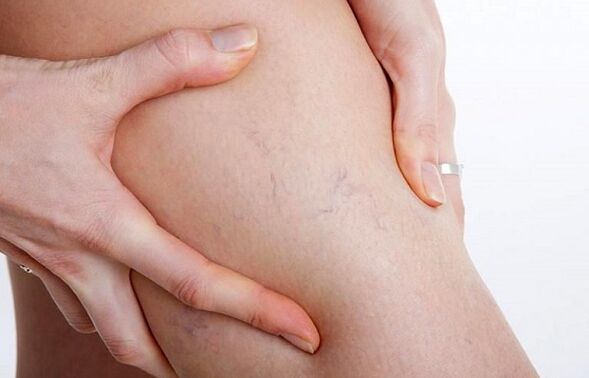
The main manifestations of the disease are deep varicose veins, which are no different from other variants of the disease - a feeling of heaviness in the legs, swelling, which increases with the progression of pathological changes, followed by changes in the color of the skin and the appearance of trophic ulcers in the affected areas.
Sometimes, due to the disordered outflow of superficial blood vessels, the pressure in superficial blood vessels increases and all veins stagnate, resulting in secondary varicose veins in the deep veins of the lower limbs.
Treatment and Treatment
Treatment of varicose veins can be both therapeutic and surgical.The conservative approach is to provide relief if the vein changes are not too obvious; for this purpose, there are topical intravenous tonics, ointments and gels.All of this combined with wearing compression stockings.
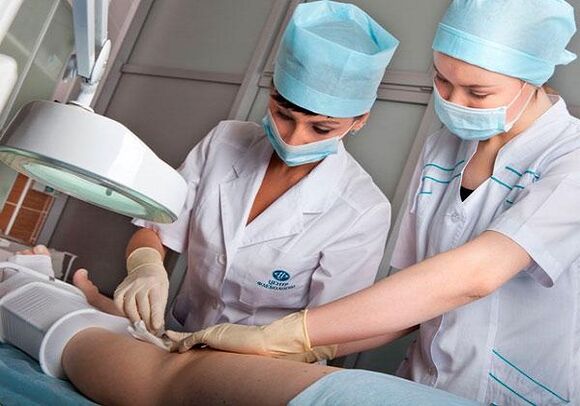
Surgical methods include many methods for radical treatment of severe varicose veins.This includes phlebectomy, crossover resection, and vein extraction.In modern methods, endoscopic venous surgery is used.